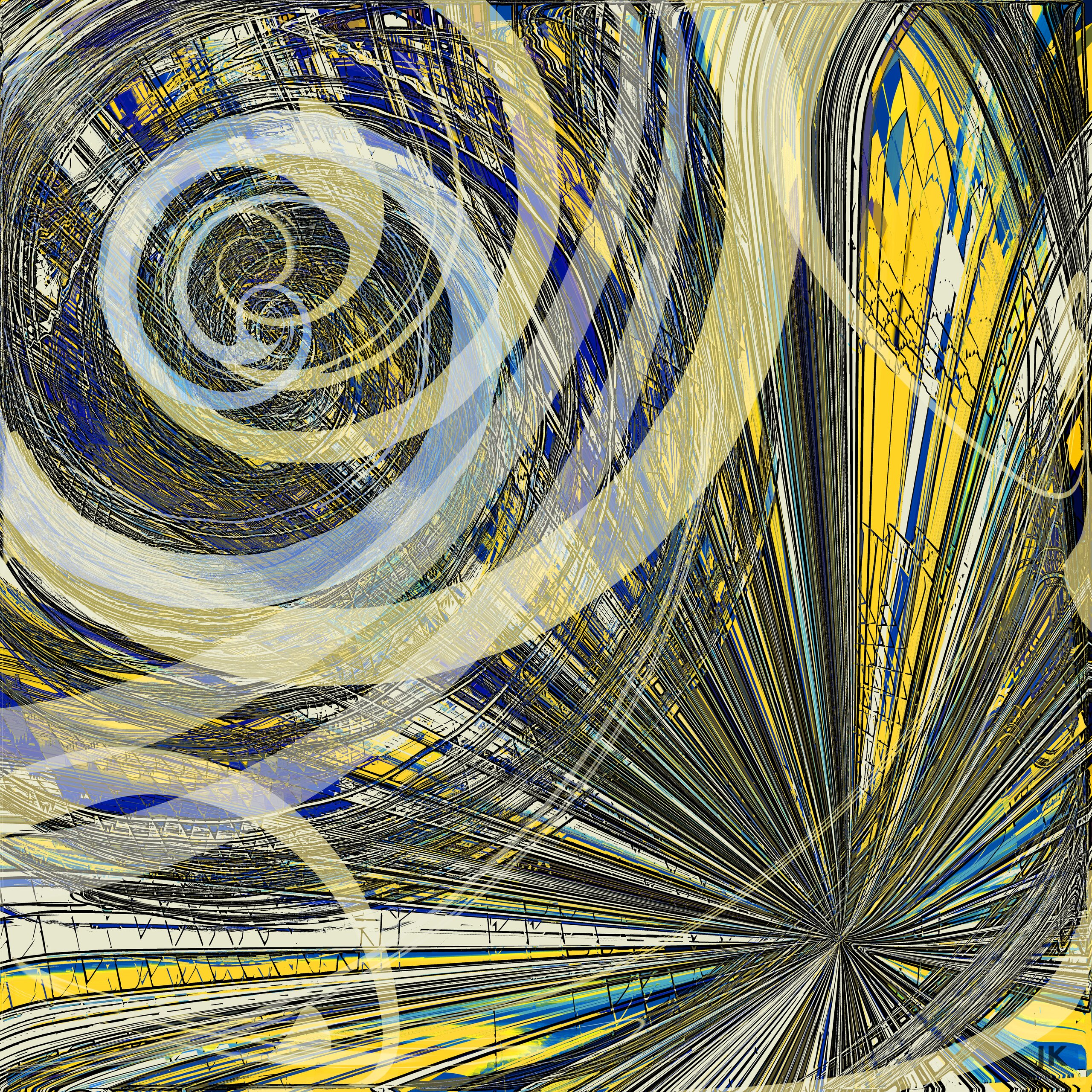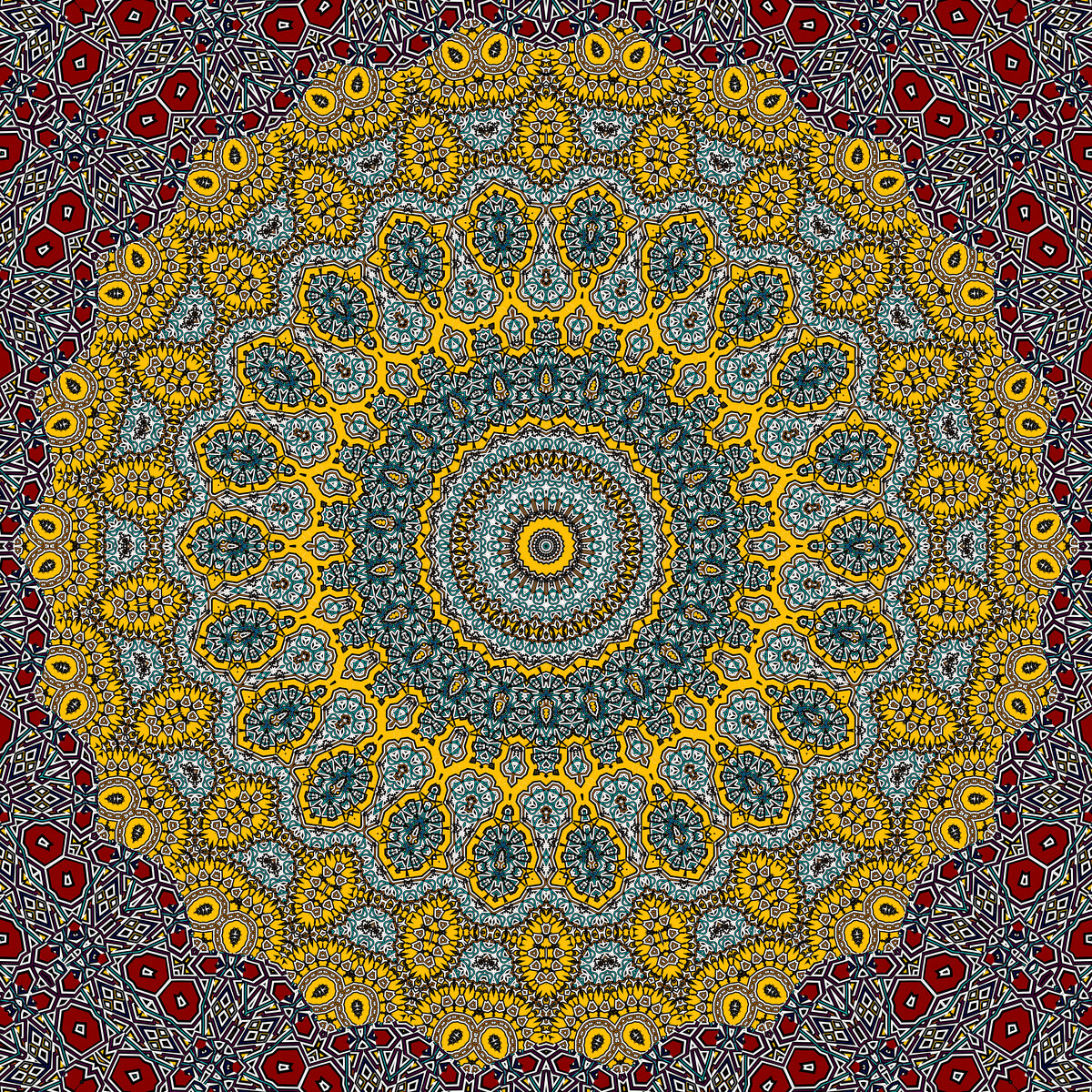
I started making digital art in 2013. I didn’t have a plan for it. I had GIMP open, I had music playing, and I kept going. Twelve years later the archive sits at roughly 2,500 pieces, and that same setup is still how almost every one of them begins.
The music comes first
I rarely sit down to make a specific image. I put something on, usually electronic, ambient, or dub, and let the sound decide the pace. Layers go down, get blended, get cut back, get mirrored. A piece is finished when the track and the picture seem to agree with each other. That’s hard to explain, but after a few thousand pieces you learn to recognize it.
That habit eventually ran in the other direction too. The albums I’ve posted here over the past year started as the same kind of listening that fed the art. Some of my more recent work makes the link literal: software I write that listens to a song and moves the shapes on screen along with it.
Why GIMP
GIMP is free, open, and has been around long enough to be dependable. I’m a Linux person, so a tool I can count on across every machine I’ve owned matters more to me than any particular feature. Its limits have shaped my style as much as its strengths. Many of the textures you’ll see in my work came from pushing a filter further than it was meant to go and keeping whatever happened.
An honest note on process
People reasonably ask about AI, so here’s the plain answer. Most of my art is made by hand in GIMP. For large prints I sometimes enlarge a finished piece with an AI upscaler (Upscayl) so it holds up at size. That changes the resolution, not the composition. A smaller number of pieces did start from AI-generated images that I then edited, and those are labeled as AI. I’d rather you know exactly what you’re looking at.
Where to see it
The full archive lives on DeviantArt at deviantart.com/onojk123, and I’ll keep featuring individual pieces and series here. If something catches your eye and you’d like it on a wall, get in touch.
Twelve years in, the method is the same as on the first day: put the music on, open a blank canvas, and see what shows up.